What Is the Etnachta Trope?
Etnachta (אֶתְנַחְתָּא) is a disjunctive cantillation mark, or trope, that signals the main pause in the middle of a Torah verse. Its Aramaic-derived name means "rest" or "pause," and it functions much like a semicolon, dividing a verse into two halves.
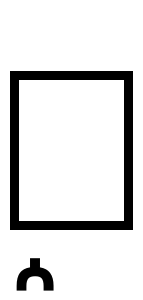
אֶתְנַחְתָּא
Disjunctive (pausal) accentWhat it does in the verse
Etnachta is a disjunctive (pausal) accent that marks the principal division of a verse, splitting it into two main parts. It is a first-level, "Emperor"-tier disjunctive, sitting at the top of the cantillation hierarchy alongside sof pasuk / silluq (which ends the verse); etnachta marks the chief mid-verse break. It never appears more than once in a single verse, so it reliably identifies that one main internal pause. It also anchors the "Etnachta group" of trope sounds, which can include Mercha, Tipcha, and Munach as preceding notes leading into Etnachta itself.
What the symbol looks like
Etnachta is written below the word, beneath the stressed (accented) syllable. The glyph is a small wishbone- or wedge-shaped mark sitting under the letter, though its exact rendering varies by font. In Unicode it is U+0591 HEBREW ACCENT ETNAHTA (◌֑), a nonspacing combining mark in the Hebrew block (for example, ט֑וֹב).
Good to know
Etnachta is one of the most common cantillation marks in the Hebrew Bible, appearing in most verses. According to occurrence counts cited by Wikipedia, it occurs 5,483 times in the Torah (Genesis 1,466; Exodus 1,145; Leviticus 813; Numbers 1,151; Deuteronomy 908), 4,796 times in Nevi'im (the Prophets), and 2,933 times in Ketuvim (the Writings). That ubiquity stands in sharp contrast to rare marks such as shalshelet, which appears only four times in the entire Torah. The te'amim — the Masoretic system of accents that includes Etnachta — was developed by the Masoretes between roughly the 7th and 10th centuries CE. Note that the three poetic books (Psalms, Proverbs, and Job) use a separate accent system in which Etnachta's role differs from the 21 prose books.
Frequently asked questions
What is Etnachta?
Etnachta is a Hebrew cantillation mark (trope) used when chanting the Torah and other biblical texts. It is a disjunctive accent that marks the main pause in the middle of a verse, dividing it into two parts.
What does Etnachta mean?
The name Etnachta comes from an Aramaic root meaning "rest" or "pause." It refers to the mark's role as the central pausal point within a verse.
Is Etnachta a pause?
Yes. Etnachta is a disjunctive (pausal) accent — it signals the principal mid-verse pause, functioning much like a semicolon. It appears only once per verse, marking that single main internal break.
Where is the Etnachta symbol placed on the word?
Etnachta is placed below the word, beneath the stressed syllable. It is a small wishbone- or wedge-shaped mark (Unicode U+0591), and TropeTrainer displays the glyph in context so you can see exactly where it falls.
Ready to start chanting?
Join thousands of students, cantors, and congregations who learn Torah with TropeTrainer.
© 2026 HazzanSolutions. All rights reserved.